Showing posts with label kiwi. Show all posts

Wednesday, May 04, 2011

Kiwi-made Preaching

A quick update on the Kiwi-made Preachingforums in October...

The venues in Auckland, Waikanae and Christchurch are confirmed..

A page has been added to the Kiwi-made Forum with more details regarding dates.

Paul Windsor writes: we are now working on signing-up 60 'Questions-Askers' who will provoke us. There is no shortage of people to ask, that is for sure (but we would be glad to consider your suggestions).

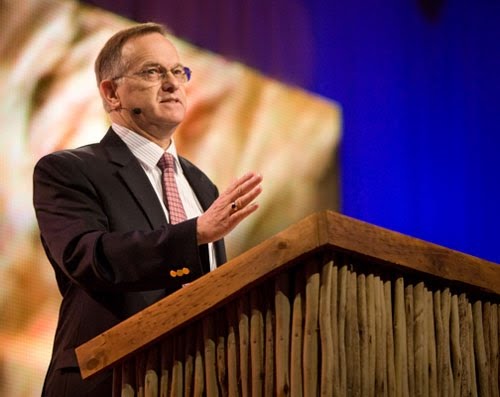
Chris Wright is confirmed as the companion for the day, coming out from the UK for the week.

He will open and close each forum with separate 'Exclamations' and then mix and mingle with people through the day.

Two things at this stage:

1. If you are a facebook-user, please 'like' the 'kiwi-made preaching' page and 'share' it with others as we intend to use it to update people regularly.

2. The best outcomes to the forum will be achieved when a preaching team from a local church comes together, divides 'n conquers the total menu on the day and then, on some later occasion, gets together for a debrief. We think this approach could provide a huge boost to the preaching ministry in a local church. Please begin to pray and plan along these lines.

Monday, February 21, 2011

K.I.S.S

Andrew, the Tall Skinny Kiwi blogger, who's currently in New Zealand at the moment, (at the Ngatiawa Contemplative Monastery as he calls it, though Ngatiawa Contemporary Monastery seems to be what they call it) wrote in a recent short post:

Praxis focuses on what they call the "emerging postmodern paradigm of mission". Which reminds me of David Bosch who suggested we were in the 'postmodern' paradigm, a term he wanted to replace with the word "ecumenical". As we all know, this never happened, probably due to his untimely death in 1992 and the reluctance of the evangelicals to embrace the "ecumenical" word, despite the fact that it occurs in the New Testament. But "the emerging postmodern paradigm of mission" would probably have his stamp of approval.

I'd hope that some other word or shorter phrase would eventually take off rather than 'emerging postmodern paradigm of mission' which quite honestly apart from being an awful mouthful doesn't tell us anything much. 'Ecumenical' now has a dated sound, and it lacks any sense of mission in it, as far as I can see.

I'm just reading Bosch's magnum opus, Transforming Mission, for the first time, after having sold it to innumerable customers over the years. It's quite some book and is full of good insights, particularly in relation to Matthew and Luke (by which you can guess that I'm probably not a very long way through it). Possibly Bosch would have used 'the emerging postmodern paradigm of mission' but he strikes me as a writer who's clearer than that, and I suspect he might have come up with something more useful. [Though I've just noticed that he uses 'paradigm' in the subtitle...!]

My sniping here isn't helped by the fact that 'postmodern' is a word without meaning, 'emerging' isn't much better, and 'paradigm' has been on my list of don't use words after I kept hearing it being overused in my office here in my first year (2008). Paradigm shift is a scientific term, primarily, which has become popular in other circles.

Note this paragraph from the Wikipedia article:
In the later part of the 1990s, 'paradigm shift' emerged as a buzzword, popularized as marketing speak and appearing more frequently in print and publication. In his book, Mind The Gaffe, author Larry Trask advises readers to refrain from using it, and to use caution when reading anything that contains the phrase. It is referred to in several articles and books as abused and overused to the point of becoming meaningless.

I'll leave Bosch with the last word:
Our mission has not life of its own: only in the hands of the sending God can it truly be called mission. Not least since the missionary initiative comes from God alone.

Tuesday, February 08, 2011

Faithfulness


The Biblical fact is that there are no successful churches. There are, instead, communities of sinners, gathered before God week after week in towns and villages all over the world. The Holy Spirit gathers them and does his work in them. In these communities of sinners, one of the sinners is called pastor and given a designated responsibility in the community. The pastor's responsibility is to keep the community attentive to God. it is this responsibility that is being abandoned in spades.
Eugene Peterson, from Working the Angles.

I found this quote on a site called Epic Fail Pastors Conference. It's one of several quotes sliding past on the front page of the site. This Conference is aimed at those ministers who are sick of the kind of conferences that feature air-brushed guys who've been to the gym a lot and who run mega-churches that don't know the meaning of the word 'failure.' I suspect it could be very 'successful.'

The Out of Ur blog offers some of the thinking behind the Conference:

-What if we offered a space that is gutsy, hopeful, courageously vulnerable for pastors to let go of the burden to be a Super Pastor?

-What if we could hold an event that was free from the thrills and frills of other pastors conferences?

-What if we came together as epic failures and sought not successful models or how-do’s but instead celebrated faithfulness in ministry because of the reality of Jesus?

-What if we were reminded that we’re not responsible for being ‘successful’ in ministry, but we are responsible for being faithful to the calling that God has laid out for us – regardless of the outcome?

-What if we had a conference that was not led not by famous pastors who are household names, but by scandalously ordinary ministers and leaders who are faithfully attempting to join with God – even in the midst of glaring obscurity and anonymity?

Sounds like the type of conference that many Kiwi pastors could do with attending. Note the key word in the 'thinking': faithfulness.

<><><><><><><><>

I have to include one of the comments from the Out of Ur site in relation to this post:

Hi, I'm Jarrod and I'm a failed pastor.

(Everyone: "Hi, Jarrod.")

I'm a recovering megachurch staffer. But it's been 67 days since I attended my last "How you can do what I did" conference, and I've been reading Jean Vanier every day since.

(Applause.)

I can't wait to see what I will learn at the Epic Failure gathering. Maybe I'll find a sponsor.

There are several other equally good comments...check them out!

Poster by Sean MacEntee


Sunday, November 28, 2010

More on curating worship

About a month ago I quoted from Jonny Baker's book, Curating Worship. Looks like this idea is on a roll, as now New Zealander, Mark Pierson, has put out a book with a similar title.

At this point I can't tell you much about it, but Mark has provided some info himself: I have recently had published a book that may be of interest to you, or to those you know who put church worship events together on either a regular basis or in occasional missional and public-space contexts.

Its a very Kiwi perspective on developing a new vocabulary and language for talking about public worship and ways of strengthening our worship whatever the style might be.

The product description on Amazon is a little skimpy, but there is one review on there: Mark Pierson doesn't just talk about what it is to curate worship. This well written and thorough book blends theory, theology, practical advice, ideas, examples and challenges in a very humble and vulnerably honest way.

It is a very personal book, written by a very wise and intuitive man of God. He shares thoughtful stories illuminating the process of creating significant, transformative worship experiences. He asks critical questions. He leaves room for exploration, imagination and reflection.

Mark has written this book the same way he would curate a worship event that allows the participant to encounter and draw into a deeper relationship with God. This book is Christocentric. It is inspiring, encouraging and will have a profound effect on your ministry.

Every church leader, pastor, worship leader/curator, and church member that aspires to participate in an authentic community of Christ should read this book. [The reviewer is Red Livingstone.]

Monday, September 27, 2010

New David Runcorn title


The Road to Growth Less Travelled: Spiritual Paths in a Missionary Church, by David Runcorn.

This is one of a wide-ranging series of booklets (all 27 pg long) from Grove Books. Part of what Runcorn is saying is that we need to be careful to challenge rather than mirror our culture, and that our very ‘irrelevance’ to the society at large may be one of our strengths.

He also explores why so many people are drifting away from churches, while still ostensibly remaining Christian. At one point he quotes Douglas John Hall: ‘the church of Christendom, so often growing in the wake of national, expansionist interests, missed [the sense of loss in the Christian life].’ ‘Christendom tried to be great, large, magnificent. It thought itself the object of God’s expansive grace. It forgot the meaning of its election to worldly responsibility. Today we are constrained by the Spirit to rediscover the possibilities of littleness.’

Paul Fromont has written four brief posts on the Prodigal Kiwi blog discussing some of the book’s points, starting here.

Thursday, July 01, 2010

Being Christian in the South Pacific....and more!

2010 Conference - Being Christian in the South Pacific: Kiwi Christian Practice
Pastoral/Practical Theology in Aotearoa New Zealand
Monday and Tuesday, November 8 and 9
Monday, 9:30 to 5:00
Tuesday, 9:30 to 3:30

Location: Knox Centre Seminar Room, Hewitson Wing, Knox College
Arden Street, off Opoho Road, Dunedin

Cost: $10 donation to cover morning and afternoon tea/coffee/biscuits
Optional group dinner on Monday night at a local restaurant

Pastoral/practical theology stands at the intersection of Christian ministry and academic research. In pastoral/practical theology, we critically examine the practices of Christian ministry using theological and historical analysis as well as humanities and social science research methods.

Please forward this email to anyone who you think would enjoy this conference. Please consider proposing a paper, and please encourage post-graduate students to think about offering a paper. If you wish to register for the conference, please email Mary Somerville with your contact information: msomer@orcon.net.nz

Looking forward to seeing you in Dunedin,

Lynne Baab, Jacky Sewell, Anne Thomson, Chris Lee, and Mary Somerville -Steering Committee


Call for Papers
Pastoral/Practical Theology in Aotearoa New Zealand, 2010 Conference

We are seeking presentations that address a wide variety of topics related to congregational life in Aotearoa. We hope that graduates and current students of MMin, MTheol, DMin and PhD programs who studied topics related to congregations will consider presenting a summary of their research or one aspect of their research.

We are seeking papers for 20 and 40 minute slots. In a 20 minute slot, please plan on speaking for 15 minutes and allow five minutes for discussion. In a 40 minute slot, please plan on a 30 minute presentation and 10 minutes for discussion.

As a rule of thumb, you talk at about 100 words a minute, so a 15 minute paper (in a 20 minute slot) should equate to roughly 1,500 words, and a 30 minute paper (in a 40 minute slot) to about 3,000 words.

In submitting a proposed paper, please,
• indicate what sort of time slot you are applying for, remembering that most of us suffer from the occupational hazard of nearly always saying more than we think we’re going to.
• include a 50-100 word abstract of the proposed paper.

These should be sent to Lynne Baab at lynne.baab@otago.ac.nz, or if necessary by post to her at the Department of Theology and Religious Studies, University of Otago, PO Box 56, Dunedin, and should be received by July 30.
Tuesday, June 29, 2010

Re-thinking priesthood

Sometimes there's a great temptation to simply copy a blog post from somewhere else and dump it in your own blog, especially when everything that's in the post is of value.

However, I'll resist the temptation and point you straight to the source - in this case, the Prodigal Kiwi(s) blog, and the post entitled: Re-Thinking Priesthood for the Sake of Mission, the Present and the Future.

The reason this blog post struck such a chord was that it's written very much along the lines of the thinking of the Presbyterian National Mission Office - in particular the National Mission Enabler, John Daniel. Substitute 'Ministry' for "Priesthood' and you could be talking about the Presbyterian denomination.

What's great about this post is that it shows the Holy Spirit isn't just working in one part of the church, but much wider.

Thursday, May 07, 2009

Virtual Church again

Tall Skinny Kiwi blogs on the 5th May about a quote by Yuang Han Kim, who wrote in the book, The Identity of Reformed Theology and Its Ecumenicity in the Twenty-First Century: Reformed Theololgy as Transformational Cultural Theology, Reformed Theology: Identity and Ecumenicity, (it's edited by Wallace M. Alston and Michael Welker, who plainly aren't terribly good with catchy titles).
Kim writes: “Cyber-worship and churches have begun replacing traditional Christian worship and churches. This increasing phenomenon will result in a certain wearing away of the historical institutional churches and worship.”
The problems of the cyber-church are as follows.
First, the cyber-church can never be a spiritual church. It risks the danger that in the electronically mediated virtual world the experience of the holy will become visual and secularized. It also faces the danger that the Word of God pervading the depth of the soul will be changed into the on-screen messages of the electronically reduced multimedia.
Second, the cyber-church is not a real church. It is merely a virtual church, existing only in the electronic network of the Internet.
Third, the cyber-church lacks face-to-face encounter and personal fellowship. Dialogue with a partner on-screen is not the same as dialogue with someone whom one knows personally."
The post brings a lot of comment, and some/many of these are well worth reading. Check them out for a good discussion on virtual church.

Tuesday, March 31, 2009

Finding a way home

I've snaffled the following snippet from the Prodigal Kiwi blog - hope they won't mind. (It was written back in August last year.) It comes from a talk (?) by Dave Tomlinson, and may in fact also appear in his recent book, Re-enchanting Christianity, which hadn't been published at the time the PK blog wrote their post (but has been now).

“Every day people are straying away from the church and going back to God.”
Lenny Bruce

“…People are no less spiritual today than they were in the past, but they are a lot less religious. A disconnect has occurred between religion and spirituality: people no longer see religion or church as the natural setting in which to explore or express their spiritual aspirations. So they are drifting away from churches in droves. However they are not doing so because they no longer believe in God, or because they have no spiritual hunger, but because in their experience church is neither offering a faith they can believe in, nor an existential spirituality that can excite or satisfy the deeper yearnings of the soul. Many long to reconnect with the sacred mystery of life, to discover their place in the cosmos, but they don’t see church or religion as a way of achieving this…I see no future in the twenty-first century for expressions of Christianity that are not Spirited. Our world longs for numinosity: for a sense of awe and mystery, for sacredness, spirituality and enchantment, for something ‘more’ than the purely rational and cerebral. If the church fails to engage with, and cater to, this longing, it has no real future…”

Tuesday, February 10, 2009

Emerging - or submerged?

One of the reasons I believe the simple, organic/house/emerging church movement is continually gaining ground and in some countries, blossoming beyond expectations, is because it is sustainable and reproducible, just as the early church was. The ministry does not get put on hold when the money runs out or loans are inaccessible. Ministry does not have to wait for a building or a paid professional to come and run the show. This recession will speak to us, if we have ears to hear, and will highlight an alternative to the church system that has flourished under Western capitalism. It will spotlight simple and sustainable church planting as it worked in the beginning of the church, as it has advanced the church through the centuries, and as it is being played out today both overseas and under the radar in Western countries.

Tall Skinny Kiwi has an interesting post on the recession, on debt and on the way Christians might be best to use money.

Monday, December 22, 2008

Advent Conspiracy

Regrettably, it's a bit late for this video - for this year. (I've only just discovered it.) And though it makes part of its point by relating to the US, it's certainly something that Kiwis could do with seeing (we being almost as consumerism-minded as the US).


Check it out!

Monday, October 06, 2008

More Commandments for Bloggers

Everyone's getting in on the act, it seems. Tall Skinny Kiwi points to an older set of Ten Commandments for Bloggers - they were posted in 2005 - that were written by Phil on A Thinkhammer Blog. These have a less 'religious' approach, though they're still based on blogging with integrity.

Ben at Faith and Theology offers his own set of Commandments. These ones tend to focus on not seeing yourself as more important than you are (you're only a blogger, you know, not God, the Pope, a church service or a variety of authoritative other voices).

The Commandments have made some news: The Times (of London)' religious editor wrote a piece on them, as did The Telegraph.

All these posts seem to be saying: if you're a blogger, be humble!

Tuesday, July 08, 2008

Wikinomics

In a recent post on the blog, Tall Skinny Kiwi, Andrew Jones writes about the changes that are taking place in Mission.
...In my travels over the past 2 weeks I have talked to mission leaders in Norway, Netherlands, England and Scotland about the relentless change going on in their worlds. I have been in missions and social enterprise for more than two decades and I really can't remember a time when things were changing so quickly and so radically. There is a dramatic reshuffling of priorities, a flattening of hierarchies, a giving away of the farm, and a greater openness to collaboration with each other. A lot of this change in priorities and thinking is reflected in and/or stimulated by the change of media from print-based to web-based aggregation, retrieval and distribution of new media .

That last sentence is the essential point he's making, and he goes on to recommend some books related to the topic, plus the way in which the giving away of information, or of "losing your life in order to gain it, and I was reminded of other passages in the Scriptures that call for transparency, generosity and trust rather than secrecy, hoarding and self-interest."

One book he recommends is Wikinomics: How Mass Collaboration Changes Everything by Don Tapscott and Anthony Williams. It's not particularly focused on mission in the Church sense, but does talk about the way the worldview is changing in the light of the Web and all the implications that go with that.

Thursday, June 26, 2008

Jones' Top Five

Back at the beginning of June, ex-pat Kiwi, Andrew Jones, who hosts the Tall Skinny Kiwi blog, wrote a list of five books that he regards as the top five for reporters, writers and researchers investigating ,or interested in, the Emerging Church movement. For his comments on these, check out the relevant post.

1. Emerging Churches: Creating Christian Community in Postmodern Cultures, by Ryan Bolger and Eddie Gibbs.
2. The New Conspirators, Creating the Future One Mustard Seed at a Time, by Tom Sine.
3. The Emerging Church, by Dan Kimball.
4. The Church on the Other Side, by Brian McLaren,
and several contenders for 5th place:
The New Christians: Dispatches from the Emergent Frontier, by Tony Jones
Revolution, by George Barna
The Irresistible Revolution, by Shane Claibourne
The Great Emergence, by Phyllis Tickle
The Tangible Kingdom: Creating Incarnational Community: by Hugh Halter and Matt Smay.

An interesting bunch. They won't all appeal, and you'll have varying views on some of the approaches, but at least one or two of the top four are worth a look if you haven't already come across them.