Showing posts with label paul. Show all posts

Sunday, November 04, 2012

Scathing remarks


This is a copy of a post I put on my own blog, this morning, but it's mention of 'missional' makes it relevant for this blog as well. 

A friend of mine, Lynne Baab, has recently brought out a new book entitled, Joy Together: Spiritual Practices for Your Congregation.  The focus is on ways to use the well-known spiritual disciplines or practices of the Christian church in groups, or even with full congregations.
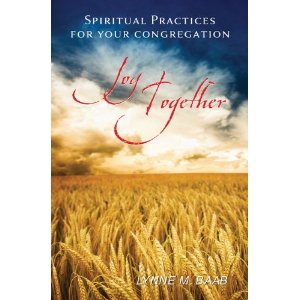
This is an interesting take on the disciplines, which have certainly been used communally at many times in their history, and it's good that Lynne has brought them back into focus in this way again.  I haven't finished the book yet, though I'm getting close, but I just wanted to make a comment on the section I was reading this morning, which is about Hospitality.  Some might not regard hospitality as a Christian discipline, any more than they might consider the first item on Lynne's list, Gratitude, to be one.   Be that as it may, both are in the book, and both need discussing in terms of our Christian lives.  (This is not to say that people of other religions, or those who don't believe in any god at all, are never grateful or hospitable.  The focus of the book is on these things from a Christian point of view.)

One thing struck me this morning in the section on hospitality.  It came out of this passage on pages 124-5.

Holding a coffee hour before or after a worship service provides perhaps the most basic opportunity for hospitality.  Recently my students engaged in a spirited online discussion about the role of coffee hour in a missional focus for a congregation.  They had scathing remarks for the poor-quality coffee and cookies that are so often offered at coffee hour.  Several of them said that we talk in Christian circles about Jesus' abundant welcome, and then we provide mediocre food and drink at coffee hour, a cognitive dissonance that does not exactly welcome the stranger. 

I stopped reading at this point.  Now, Jesus certainly talks about abundance, but while he was on earth I don't think there was any point in the many meals he shared with other people when he stopped and said, Look, I can't drink this coffee, or eat these cookies (biscuits, depending on the translation).  It's substandard.  I'm the King of Kings, for goodness' sake.  Are you seriously giving me coffee that tastes like dishwater and cookies that look as though one of the kids threw them together while they were playing on their iPhone?

My sense is that Jesus wouldn't have fussed about it.  Like Paul, he would have said, I don't speak from want, because I've learned to be content in all sorts of circumstances.  I know how to drink mediocre coffee and crummy biscuits, and I also know how to drink my skim cappuccino freddo and eat my caramel crunch slice; in any and every circumstance I have learned the secret of being filled and going hungry, both of having abundance and suffering need.

I think it was the mention of 'scathing remarks' that really struck me in the students discussion.  There's an element of arrogance here, a middle-class tone that says that proper coffee is more important than hospitality.  For me the cognitive dissonance comes between the students' attitude and the apparent lack of humility.  Surely the coffee and biscuits are merely a means to an end, and that is to relate to the people who might come to the coffee hour.  Perhaps you can agree together that the coffee isn't anything to write home about, and then get onto the more important topic of who that person is that's decided to grace your coffee hour by drinking your mediocre coffee and tired biscuits.  

Sunday, March 06, 2011

Toxic Pastors


Author, Joe Hellerman is presently at work on a book about the use of power and authority in Christian leadership. The provisional title is When Pastors Were Servants: Recapturing Paul’s Cruciform Vision for Authentic Christian Leadership.

He writes:
The motivation to take on the project came from numbers of students at Talbot, and colleagues in pastoral ministry, who have found themselves on the receiving end of abusive, hurtful leaders. The book will contain, among other things, a series of narratives (well disguised, of course) detailing the various experiences that these men and women have had at the hands of narcissistic, dysfunctional leaders in their churches.

Here is perhaps the most counterintuitive reality I have encountered in the whole process of researching the topic: all but one of the dozen or so abusive local church leaders described in the book are still in their churches, fully in control of the church’s vision, ministry, and staffing.

At a deeper level, people respond to powerful, charismatic leadership out of a profound longing for a god-like figure in their lives. In religious contexts this person can be a gifted, celebrity pastor who simultaneously serves as both God’s representative and spiritual father to a willing, compliant congregation. Jesus was apparently well aware of this dynamic: ‘Do not call anyone on earth your father, because you have one Father, who is in heaven’ (Matt 23:9).

I think this promises to be a book worth reading, paradoxically in the light of the need ministers in New Zealand and elsewhere have for avoiding burnout and stress-related sicknesses.


Wednesday, February 24, 2010

More from Croucher

As promised, here's another article from Rowland Croucher on the issues of stress and burnout amongst ministers. This one begins with a story about a man who had the ability to preach, but always lost his church job through conflict. In the end he was virtually down and out, his wife just managing to make ends meet.

Rowland goes on to look at what helps a pastor/minister last the distance.

Today it's both easier and harder to be a pastor. Easier, because we have more resources to help us - like the World Wide Web for sermon-material (ever used the search-engine Google as a concordance?), more support-groups to encourage and pray for us, better access to the world's practical theology experts, and a higher standard of living, on average, than pastors have ever enjoyed.

But it's also harder. Many of us can identify with the apostle Paul who said, 'Who is equal to such a task?', about his own call to pastoral ministry. These days the expectations of our people are higher - and more likely to be expressed vigorously. Up-front leaders and speakers compete with dynamic personalities on television. There are more 'religious' people not attending churches (in the West) than ever before in history. Our people are likely to be better-educated - and differently-educated than we are. 'One size fits all' doesn't work any more: people are more mobile, and brand-loyalty doesn't work for Generation X'ers (those born since 1965) - or even Baby Boomers (born between 1946 and 1964).

He offers a number of suggestions over several articles (I've only listed the first few here, as the others run comfortably on from the one before.)

1. Jesus as the model for ministry
2. Spiritual formation -keeping on bel
3. Images of Ministry - what is yours?
4. Saint or Pharisee?
5. Keeping the Spiritual Disciplines - this point keeps turning up; is God saying something?!
6. What about the 'Call'?
the rest of the article appears in a second page:
7. Understanding yourself - how much does your family history affect your work?
8. Co-dependency - blaming others for your own faults
9. Mentors and Networks - absolutely essential!

Wednesday, February 17, 2010

Bullying, Abusive Congregations

I was alerted to this blog post on abusive congregations yesterday by a tweet from a friend on Twitter. So I'm passing it along. The post itself is fairly moderate, but the several comments that follow show an appalling problem within the church - an appalling lack of Christian behaviour from people in some congregations towards their ministers. You have to wonder if they ever pray, read their Bibles, think about Christian discipleship.

I've heard of such things with other colleagues, and experienced it myself in a somewhat less severe way when I was filling in as pastor at a former church, so it's by no means an American problem.

The post itself refers to research on the topic from the Clergy Health Initiative, and one of the people commenting adds several useful links which anyone suffering this kind of abuse should follow up.

One of the other awful things from the comments is how many of them talk about the way in which the ministers' spouses were also abused. As Paul says, if I remember rightly, Brothers (Sisters), these things should not be!

Monday, February 15, 2010

Paul's leadership model

Eugene Peterson translates the beginning of 1 Timothy 3 in this way:

If anyone wants to provide leadership in the church, good! But there are preconditions...

In an article on the site now known as Smart Ministry, Todd Rhoades takes a look at these 'preconditions' in the light of our current society, using Peterson's up-to-date language. He says it's worth doing a kind of examination of yourself every so often to see whether your leadership behaviour is 'fitting' to the leadership model Paul wrote about.

Are you pushy rather than gentle, for example; are you thin-skinned; are you well thought of by outsiders? These are just a few of the various points that need to be considered, and Rhoades' brief comments are worth giving attention to.

Thursday, January 21, 2010

Christianity Rediscovered


When I worked as manager of OC Books in Dunedin, I frequently sold copies of Christianity Rediscovered, by Vincent Donovan. However, it's only in these holidays that I've finally got round to reading it (!)

In my opinion, it's a book every minister should read (as well as every Christian who isn't an ordained minister!). It's written from a Catholic viewpoint - Donovan was a Spiritan priest (that is, a member of the Congregation of the Holy Spirit, or the Holy Ghost Fathers) - so it needs to be read with this in mind. Nevertheless, his views on the Church establishment are applicable to most denominations.

Donovan was a missionary to the Masai people in Africa from 1955 to 1973. As a result of his work amongst them he changed his views on what being a missionary meant, on what the priesthood is or should be, and on the way in which culture affects mission work- and whether Christianity is 'different' within each individual culture.

He was successful in his work, but his work wasn't always appreciated by those in authority, and not everything he established has been maintained over the years since his departure from Africa. Nevertheless the book that he wrote as a result of his work has had a huge impact on missionary thinking ever since - though hasn't as often been followed through in practice.

This, along with the even earlier book by Roland Allen: Missionary Methods - St Paul's or Ours? (which influenced Donovan) should be on every Christian's shelves, especially on the shelves of those in 'official' ministry.

Tuesday, February 10, 2009

Networking

In his book, Never Eat Alone, Keith Ferrazzi wrote about the safety net provided by a robust network of social connections.

"Experience will not save you in hard times, nor will hard work or talent. If you need a job, money, advice, help, hope, or a means to make a sale, there's only one surefire, fail-safe place to find them - within your extended circle of friends and associates."

The same might well be said of the church. It wasn't because he thought the phrase had a good ring to it that Paul said, 'Forsake not the gathering of the saints'. He knew the value of being 'networked' within the church family, the body of Christ.

Justin Pinkerman writes about keeping up with your network in a Leadership Wired article online.
He's talking about the business network, seeing it as a kind of safety net in these difficult economic times. But the church is the same, and more so - in all times. The congregation may annoy the hell out of us (which might not be a bad thing!) but it's also a place where our particular bit of the body grows best.